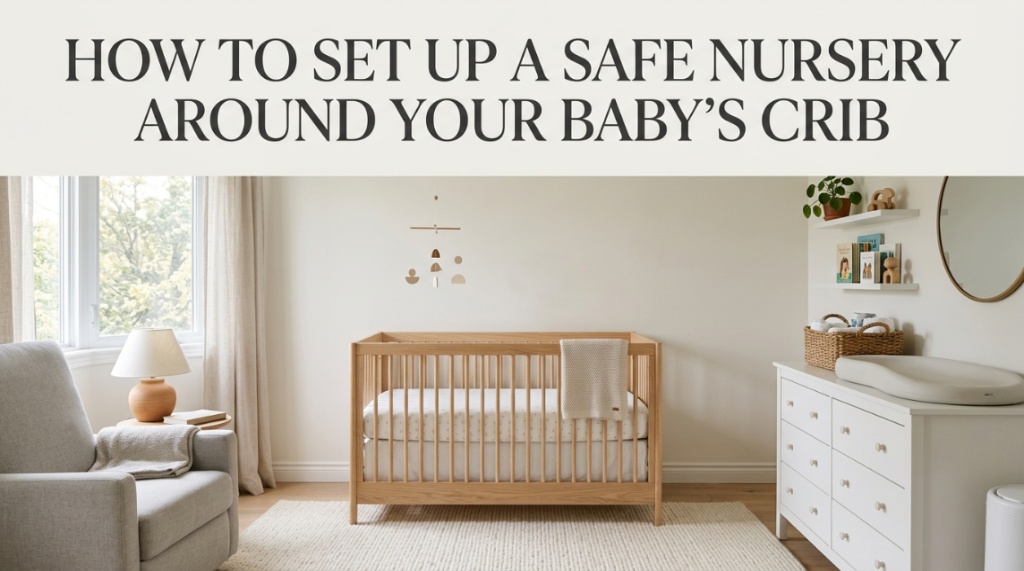
One of the safest places in your home should be the few square feet surrounding your baby’s crib. A safe nursery around your baby’s crib means keeping the sleep area free from hazards, positioning furniture correctly, maintaining safe distances from cords and windows, and creating an environment that supports healthy sleep and development. Many parents spend weeks choosing paint colors and décor, but overlook safety risks hidden within arm’s reach of the crib.
What Is a Safe Nursery Around Your Baby’s Crib?
A safe nursery is a baby room designed to minimize injury risks while supporting healthy sleep, feeding, and daily care routines.
The crib is the centerpiece of every nursery, but safety extends far beyond the mattress. Furniture placement, electrical cords, window coverings, lighting, storage solutions, air quality, and room layout all influence your baby’s safety. According to sleep safety recommendations from pediatric experts, babies sleep safest on a firm mattress in a bare crib without pillows, blankets, bumpers, or stuffed animals.
Parents often focus on appearance first and safety second. Unfortunately, many nursery accidents occur because furniture tips over, cords become accessible, or unsafe items are stored within reach as babies grow and become mobile.
This nursery setup guide explains exactly how to organize a baby room that balances comfort, functionality, and safety from newborn months through toddlerhood.
Where Should You Position the Crib in a Nursery?
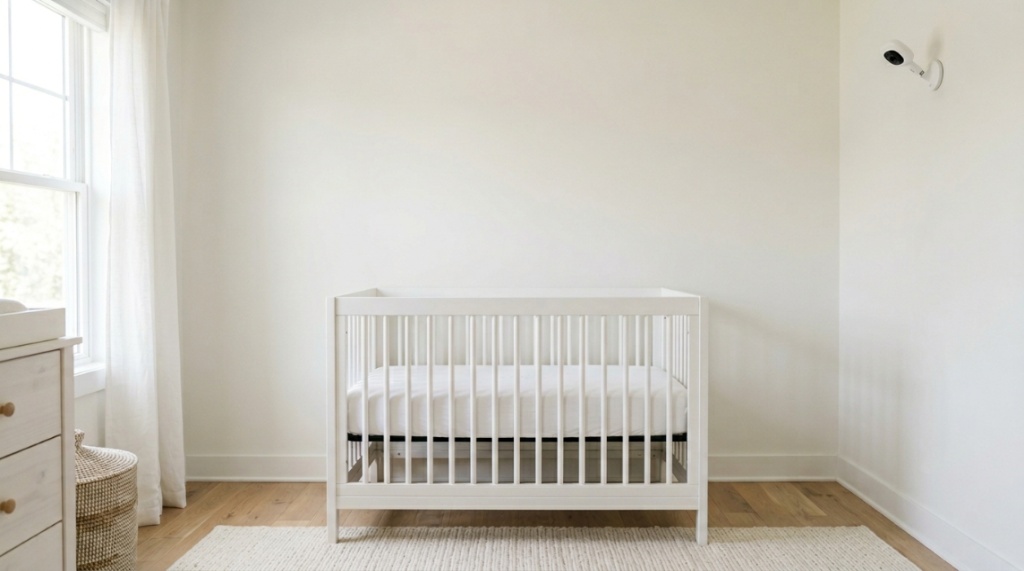
The safest crib location is away from windows, cords, heaters, lamps, shelves, and furniture that a child could eventually reach or climb.
Crib placement is the foundation of nursery safety. Experts recommend placing the crib on a clear wall with sufficient open space around it. Avoid positioning the crib directly under wall décor, shelves, picture frames, or hanging decorations.
As babies grow, they become surprisingly resourceful climbers. A nearby dresser, chair, toy chest, or bookshelf can quickly become a stepping platform.
Parents monitoring developmental milestones often notice early movements before major mobility changes. Understanding signs of physical development, such as how babies begin rotating and changing positions, can help families prepare the nursery before new safety risks emerge.
Safe Crib Placement Checklist
- At least several feet away from windows
- Far from curtain and blind cords
- Not underneath shelves or artwork
- Away from radiators, vents, and heaters
- Not adjacent to dressers or climbing furniture
- Accessible for nighttime feeding and monitoring
- Located on a flat, stable floor surface
Keeping the crib isolated from surrounding hazards dramatically reduces preventable risks.
What Items Should Never Be Inside a Baby’s Crib?
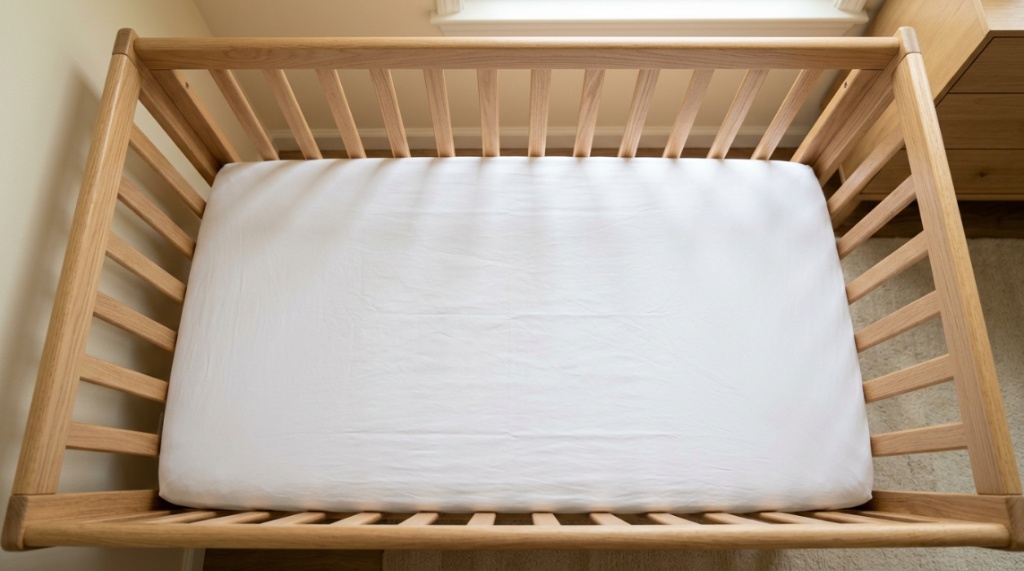
A baby’s crib should contain only a fitted sheet over a firm mattress and nothing else.
This simple rule prevents many sleep-related hazards. Decorative items may look attractive in nursery photos, but they do not belong in a sleeping space.
Items that should never remain inside the crib include:
- Pillows
- Loose blankets
- Crib bumpers
- Stuffed animals
- Sleep positioners
- Weighted blankets
- Extra padding
- Large toys
Many parents mistakenly believe bumpers protect babies from injury. However, modern sleep safety guidance discourages their use due to suffocation and entrapment concerns.
The safest sleep environment remains remarkably simple: baby on their back, firm mattress, fitted sheet, and empty crib.
How Can You Childproof Furniture Around the Crib?
Every large piece of nursery furniture should be secured to the wall and positioned where it cannot be used as a climbing aid.
Furniture-related injuries affect thousands of children each year. Dressers, bookshelves, changing tables, and storage units can tip when children pull, climb, or lean on drawers.
Anchoring furniture is one of the most important nursery safety improvements parents can make.
Furniture Safety Essentials
- Install anti-tip wall anchors
- Keep heavy items in lower drawers
- Use drawer stops when possible
- Avoid unstable shelving units
- Remove climbable objects near the crib
- Secure changing tables properly
- Inspect furniture regularly for loosened hardware
Think ahead to future developmental stages. A newborn cannot climb, but a curious toddler can reach places parents never expected.
How Should Lighting Be Arranged in a Baby Room?
Nursery lighting should provide visibility for caregiving while avoiding direct glare, overheating, or electrical hazards.
Good lighting improves nighttime feeding, diaper changes, and monitoring without disrupting sleep patterns.
The safest setup combines soft ambient lighting with a dimmable nightlight. Avoid placing lamps within reach of the crib or changing station.
Recommended Nursery Lighting Features
- Dimmable lights
- Warm-toned bulbs
- Stable lamp bases
- Covered electrical outlets
- Concealed power cords
- Low-glare nightlights
Electrical cords should never hang near the crib. Babies can become entangled once they begin standing and exploring their surroundings.
What Temperature and Air Quality Are Best for Nursery Safety?
A nursery should remain comfortably cool, well-ventilated, and free from smoke, strong fragrances, and airborne irritants.
Room temperature plays an important role in sleep safety. Overheating has been associated with increased sleep-related risks. Most pediatric experts recommend maintaining a comfortable sleeping temperature while dressing babies appropriately for the season.
| Nursery Factor | Recommended Practice |
|---|---|
| Temperature | Comfortable and moderate, not overly warm |
| Ventilation | Consistent airflow without direct drafts |
| Humidity | Balanced humidity levels for comfort |
| Air Fresheners | Limit strong fragrances |
| Smoking | Keep nursery completely smoke-free |
| Cleaning Products | Store securely away from children |
Air purifiers may be beneficial in homes affected by dust, pet dander, or seasonal allergens. Regular cleaning also reduces airborne irritants and improves overall nursery hygiene.
How Do You Safely Organize Storage in a Nursery?
Safe nursery storage keeps frequently used items accessible to parents while preventing children from reaching dangerous objects.
Storage becomes increasingly important as babies accumulate clothing, diapers, medicines, toys, and feeding supplies.
Items That Should Be Stored Out of Reach
- Medication
- Diaper creams
- Cleaning supplies
- Small toys
- Batteries
- Plastic bags
- Scissors
- Sharp grooming tools
Use drawer organizers and labeled containers to maintain order. Frequently used items such as diapers and wipes should be within adult reach but inaccessible to curious toddlers.
Closed storage systems generally provide greater safety than open shelving once children become mobile.
Should You Use Decorations Near a Baby’s Crib?
Nursery decorations are safe when securely mounted and positioned beyond a child’s reach.
Decor helps personalize a baby room, but every decorative item should be evaluated from a safety perspective.
Avoid hanging:
- Heavy picture frames above the crib
- Long ribbons or strings
- Dangling mobiles within reach
- Glass decorations
- Unsecured wall-mounted shelves
Wall decals, painted murals, lightweight artwork secured properly, and framed items positioned away from the crib are generally safer decorative options.
If you use a mobile, remove it once your baby can push up on hands and knees or reach the hanging components.
How Can You Create a Functional Yet Safe Nursery Layout?
The ideal nursery layout minimizes unnecessary movement while keeping hazards away from the sleeping area.
A practical room design improves daily caregiving efficiency and reduces safety risks.
Recommended Nursery Zones
- Sleep zone (crib only)
- Changing zone
- Feeding and soothing area
- Storage zone
- Play space for supervised activities
Keep pathways clear for nighttime movement. Avoid overcrowding the room with excessive furniture. Every item should have a defined purpose.
Many parents find that simpler layouts are easier to maintain and adapt as children grow through developmental milestones.
How Often Should You Review Nursery Safety?
Nursery safety should be reassessed regularly because a baby’s abilities change faster than most parents expect.
A room that is perfectly safe for a newborn may become hazardous once a child begins rolling, sitting, crawling, pulling up, and climbing.
Monthly Nursery Safety Review Checklist
- Inspect crib hardware
- Check furniture anchors
- Review cord accessibility
- Remove new climbing opportunities
- Test smoke detectors
- Examine outlet covers
- Inspect window locks
- Evaluate toy safety
Routine inspections help identify problems before they become emergencies.
Conclusion: How Do You Build the Safest Nursery Possible?
The safest nursery around your baby’s crib starts with thoughtful planning rather than expensive products. Position the crib away from hazards, keep the sleep space empty, anchor furniture securely, control cords and electrical risks, maintain healthy air quality, and regularly reassess the room as your child develops.
Every choice in a baby room should support safe sleep and injury prevention. Small adjustments—such as moving a lamp, securing a dresser, or removing decorative items from the crib area—can significantly improve safety.
Parents researching sleep environments often compare crib features before finalizing their nursery plans. Reviewing expert recommendations on safe crib options and nursery-ready crib designs can help ensure your baby’s sleep space meets both comfort and safety needs.
Start with the crib, evaluate every surrounding item, and create a nursery designed for both today’s newborn needs and tomorrow’s developmental milestones. A safe environment gives parents confidence and provides babies with the secure foundation they need for healthy growth.
Frequently Asked Questions About Safe Nursery Setup
How far should a crib be from a window?
Cribs should be placed well away from windows to prevent access to cords, blinds, curtains, and potential fall hazards. Keeping clear distance improves overall nursery safety.
Can babies sleep with blankets in the crib?
No. Safe sleep recommendations advise using a firm mattress with a fitted sheet only. Loose blankets can create suffocation hazards for infants.
What furniture should not be near a crib?
Dressers, chairs, bookshelves, toy chests, and other climbable furniture should not be positioned close enough for a child to reach from the crib.
Is a nursery nightlight safe?
Yes. A low-glare nightlight placed away from the crib can provide visibility during nighttime care without creating sleep disruptions or overheating risks.
When should nursery childproofing begin?
Childproofing should begin before birth whenever possible. Completing safety measures early ensures the room is prepared before developmental milestones occur.
Should shelves be installed above a crib?
No. Heavy shelves or wall-mounted storage directly above a crib can create injury risks if items become loose or fall.
How often should parents inspect nursery safety?
A monthly inspection is recommended. Regular reviews help identify new hazards as babies grow and gain mobility.