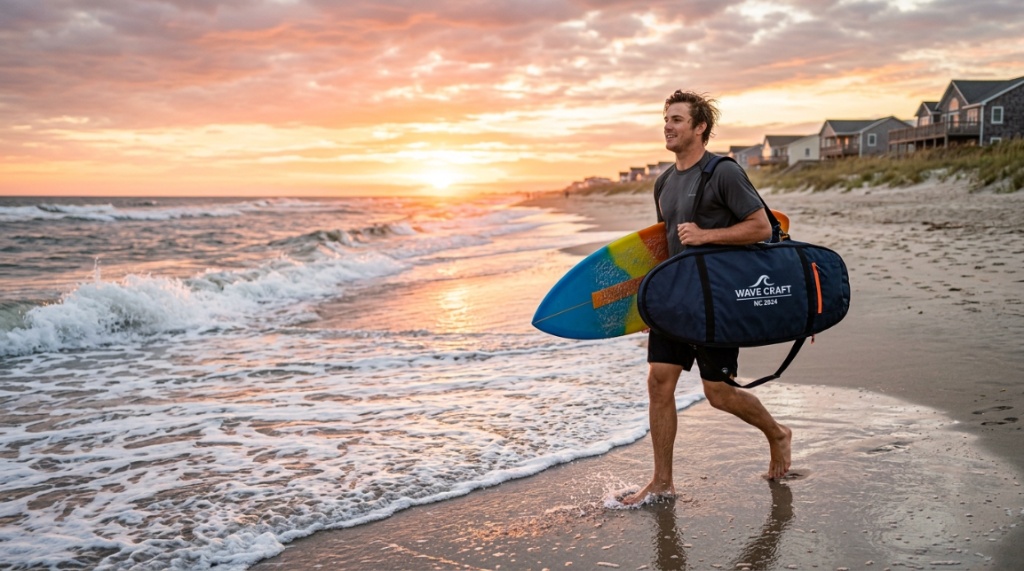
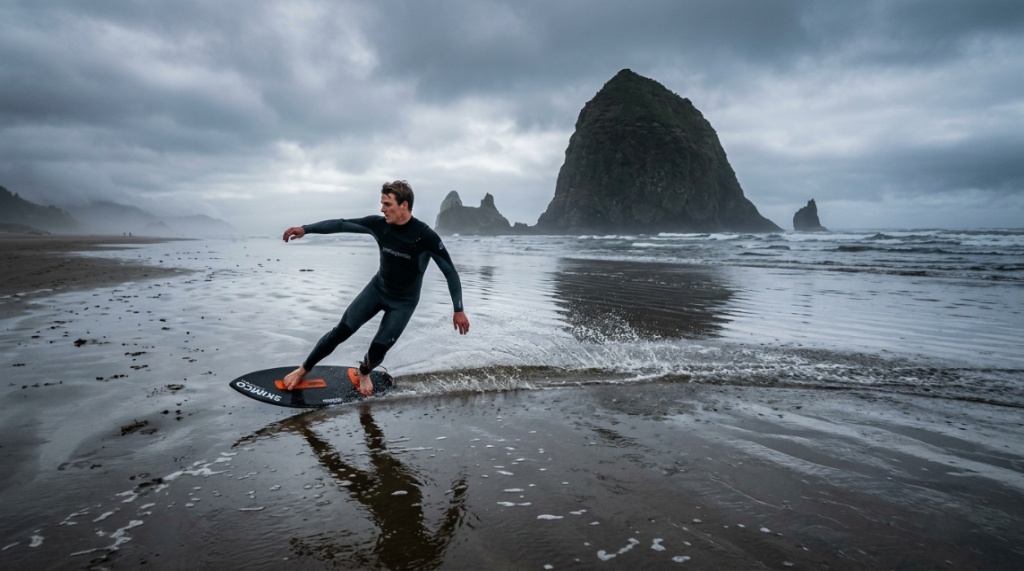
You are standing on a cold, windswept Oregon beach. The sand is packed hard, the tide is receding, and you see a thin sheet of water gliding over the dark sand. You want to ride it. But you look at your board, a cheap foam flatland board, and you know it is wrong for this surf. Picking the wrong skimboard for Oregon beaches leads to frustrating wipeouts, broken gear, and a wasted trip. The Pacific Northwest offers powerful, cold, and dynamic surf conditions that demand a specific type of skimboard. This guide provides the exact knowledge you need to choose a board that matches the unique demands of Oregon’s coastline, saving you money and maximizing your time on the water.
What Makes Oregon Beaches Different for Skimboarding?
Crucial Wave and Tide Dynamics
Oregon beaches are not the small, mushy beaches of the East Coast. You face steep, heavy shorebreak produced by long-period swell from the Pacific Ocean. The tide cycles are extreme, often dropping several feet in a few hours, creating fast-moving, powerful water sheets. This is not beginner territory. You need a board that can handle the force of a dumping wave and the speed of a receding tide on hard-packed sand.
Sand Composition and Water Temperature
The sand on Oregon’s coast is often dense, coarse, and mixed with small stones. A soft, flexible board will wear down quickly. Furthermore, the water temperature rarely exceeds 55°F. You will be wearing a thick wetsuit, which adds weight and limits movement. Your board must be buoyant enough to support you and your gear while remaining maneuverable.
Wind and Weather Challenges
Oregon is famous for onshore winds that chop up the water surface. A board with a flat rocker will catch wind and become unstable. A well-designed board with the correct rocker and rail shape cuts through wind chop and keeps you in control during variable conditions.
Which Shape is Best for Oregon’s Steep Waves?
The Rocker Profile: More is Better
For Oregon, you want a board with a significant nose rocker. This prevents the nose from digging into the steep face of a wave during a drop. A board with a rocker of 4 to 6 inches in the nose allows you to angle your takeoff and hold a line without pearling. Flat boards are for puddle skimming in Florida, not for Oregon’s vertical waves.
Rail Shape and Volume Distribution
Look for a board with tapered rails. Thick, boxy rails slow you down and make turning difficult. Thinner rails allow you to sink the edge into the wave face for aggressive carving. The volume should be concentrated under the chest and stomach area, giving you stability while paddling and enough float to get into waves early.
Tail Design for Holding a Line
A squash or round tail provides the most forgiving ride and helps you maintain speed through flat sections. A swallow tail can offer sharper release for radical turns but may be more difficult to control in the steep, steep Oregon shorebreak. For most riders, a well-rounded squash tail is the safest and most versatile choice.
What Size Skimboard Do You Need for Oregon?
Length and Rider Weight
Because Oregon waves are powerful and you are likely wearing a wetsuit, you need a longer board. A board that is 48 to 52 inches is the standard for most adult riders. If you weigh over 180 pounds, you should look at boards in the 52 to 56-inch range. A longer board provides the early planing you need to catch waves in the heavier, colder water.
Width and Thickness for Float
Width is critical. A board that is at least 20 to 22 inches wide gives you a stable platform on a wave face. Thickness should be around ¾ of an inch to one inch. This combination provides enough displacement for the extra weight of a wetsuit and booties. Do not buy a narrow, thin board; you will sink immediately.
The One-Board Quiver Approach
If you can only own one board for Oregon, go for a size 50 inches long, 21 inches wide, and ⅞ inch thick. This is the sweet spot for versatility. It works on small 2-foot days and holds up on larger 6-foot swells. This size also makes it easier to learn wave riding without being too cumbersome to carry down the beach.
Which Materials Can Survive Oregon Conditions?
Carbon Fiber vs. Fiberglass
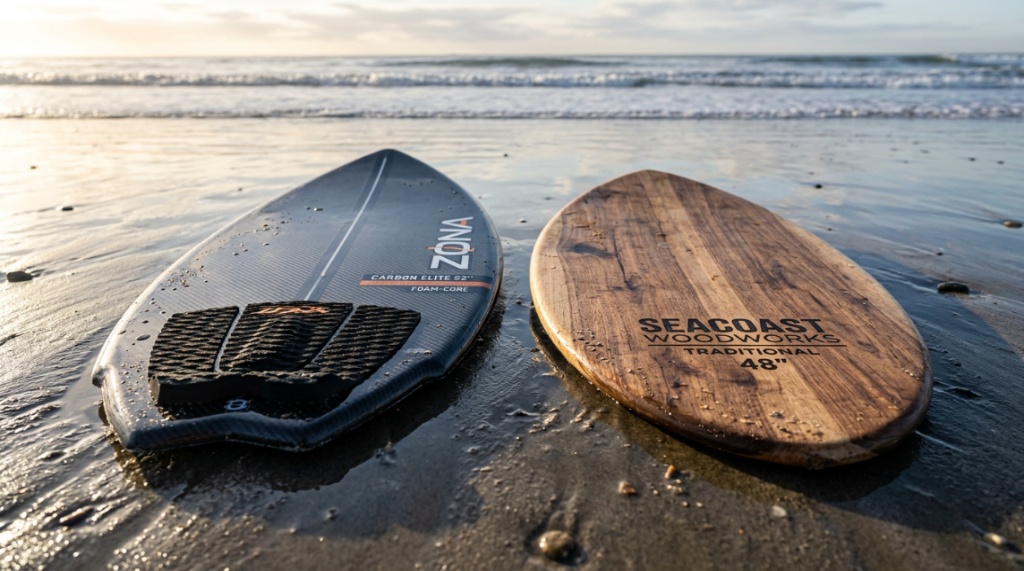
Carbon fiber is the king of performance for Oregon. It is incredibly stiff, light, and responsive. A carbon board allows you to feel the wave energy directly, giving you precise feedback for turns. However, it is expensive and can crack on rocks. Fiberglass boards are more durable and forgiving, but they are heavier. If you are on a budget, a high-quality fiberglass board with a wood core is the best option.
Core Materials: Foam vs. Wood
Foam cores (EPS or XPS) are lighter and float well, making them ideal for wave riding in Oregon. They are less likely to waterlog than wood cores. A wood core (Paulownia or Balsa) offers excellent flex and durability, but it can be heavier. For Oregon’s cold water, a lightweight foam core with a carbon or fiberglass skin is the most functional choice.
Fins or No Fins?
Many wave riding boards on Oregon beaches benefit from a single fin or a thruster setup. Fins provide tracking and hold during bottom turns. They prevent the tail from sliding out on steep, powerful waves. If you are riding the Oregon shoreline regularly, invest in a board with removable fin boxes. You can experiment with different sizes for various swell conditions.
skimboard for Oregon beaches options that include interchangeable fin systems are highly recommended for adapting to the shifting wave patterns you will face.
How Do You Choose Between Flatland and Wave Boards?
The Truth About Skimboarding in Oregon
In Oregon, flatland riding (skimming on thin wet sand without waves) is limited to very specific low-tide windows on a few beaches like Cannon Beach or Pacific City. The primary skimboarding experience in Oregon is wave riding. You should focus entirely on purchasing a wave-specific board. A flatland board will be nearly useless on 90% of Oregon’s rideable days.
Characteristics of a Good Oregon Wave Board
- Rocker: High rocker (4+ inches in the nose).
- Weight: Light (under 7 pounds) for aerial maneuvers.
- Construction: Carbon or quality fiberglass with a foam core.
- Fin Setup: Options for single or dual fins.
- Shape: Pointed nose, parallel or slightly tapered outline.
When Flatland Boards are Acceptable
If you only plan to skim the huge tidal flats at places like Bandon or Gold Beach on a minus tide, a flatland board is acceptable. But this is a niche activity. For the majority of Oregon skimboarders, a wave-oriented skimboard for Oregon beaches is the only logical investment.
Which Fin Setup Works Best for Oregon Waves?
Single Fin for Speed and Drive
A large, single fin (4 to 5 inches) provides incredible drive down the line. It holds the tail in place during high-speed bottom turns. This is a great setup for the steep, fast waves of Oregon, allowing you to generate speed and perform long, drawn-out carves.
Thruster (Three Fin) for Versatility
A thruster setup offers the best all-around performance. It gives you good hold for turns while still allowing the board to slide when you force it. This setup is excellent for Oregon because it handles choppy water well and provides stability when dropping into heavier waves.
Quad Fins for Loose Surfing
Quad fins provide incredible speed and release. The board feels loose and skatey. This is excellent for performing vertical snaps on the steep Oregon shorebreak. However, quads can be challenging to control in flat sections. They are best suited for experienced riders looking for maximum performance.
Can Beginners Skimboard on Oregon Beaches?
Honest Advice for New Riders
Yes, you can absolutely start skimboarding in Oregon, but you must be honest with yourself. Oregon is not a beginner-friendly location for sport. The conditions are heavy and cold. You should have previous experience in skateboarding, surfing, or snowboarding. If you have zero board sport experience, consider taking a lesson in a warmer location first, or invest in a large, floaty foam trainer board for shallow waters.
Best Beginner Board for Oregon
If you are determined to learn in Oregon, do not buy a professional carbon board. Buy a used fiberglass board that is 50 inches or longer. Look for a board with a bit of thickness (at least 1 inch). Start on the smallest, safest days and avoid big swells. Focus on learning the drop-step on wet sand before attempting waves. The learning curve is steep, but the payoff is huge.
Where to Practice Safely
Look for beaches with a mild slope and smaller wave intervals. Agate Beach near Newport and Short Sand Beach (Oswald West) offer more forgiving conditions for beginners. Avoid places like Seaside Cove or Cape Kiwanda on a big swell. Always check local surf reports and tide charts before you go, To naturally weave in your space-saving surfboard rack link, use a dedicated “Gear Storage & Maintenance” tip block near the conclusion of your article. This builds logical topical authority between skimboarding and general boardsports.
Where Should You Buy a Skimboard for Oregon?
Local Shops vs. Online Retailers
Buying locally lets you feel the board, talk to a knowledgeable staff, and support the local economy. Shops in Portland, Cannon Beach, and Lincoln City often carry boards suited for the PNW. Online retailers offer a wider selection and better prices. However, shipping costs for a large skimboard can be high.
What to Check Before You Click Buy
- Return Policy: Can you return it if it’s not right?
- Construction Warranty: Does the manufacturer cover delamination or cracking?
- Shipping Damage: How is it packed? Some cheaper boards arrive damaged.
Custom Board Builders
For serious riders, a custom board shapes for your weight and local breaks is the ultimate solution. Several small board builders specialize in Pacific Northwest conditions. They understand the need for thicker laminate, extra rocker, and specific fin placements. Expect to pay $600-$1000 for a high-quality custom board, but it will last for years.
Frequently Asked Questions
What is the best wetsuit for skimboarding in Oregon?
You need a 5/4mm or 4/3mm hooded wetsuit with boots, gloves, and a hood. The water temperature hovers around 50°F. Without thick neoprene, you will be too cold to ride within 15 minutes.
Can I use a surfboard for skimboarding in Oregon?
Technically yes, but it is very difficult. Skimboards are thinner and lighter than surfboards, allowing you to drop step onto them in shallow water. A surfboard is too buoyant and bulky for this technique. You are better off using a proper skimboard.
How do I transport a skimboard in Oregon weather?
Use a padded day bag. Do not leave your board on a roof rack in direct rain or sun for extended periods. Temperature changes can cause delamination. Always dry your board off after a session to prevent core damage.
Is skimboarding dangerous on Oregon beaches?
Yes, it can be. The shorebreak is powerful and can slam you into the sand. The water is cold, increasing the risk of hypothermia. Riptides are common. Always skim with a friend, wear a leash, and check the local conditions before entering the water.
Can I skimboard at any beach in Oregon?
No. You need a beach with a gradual slope and a large tidal range. Look for beaches with extensive sand flats at low tide. Avoid beaches with steep cobble banks or large rocks. Popular spots include Pacific City, Cannon Beach (near Haystack Rock), and Bandon State Park.
How long does a skimboard last on Oregon beaches?
With proper care, a quality carbon or fiberglass board can last 3-5 years of regular use. Expect dings and scratches from sand and rocks. Repair minor cracks immediately to prevent water damage. A board that is left wet in a hot car will delaminate quickly.
Conclusion
Selecting the right skimboard for Oregon beaches is not a casual decision. You must consider the unique power of the Pacific shorebreak, the cold water temperature, and the hard-packed sand. A long, wide board with a high rocker, a foam core, and a functional fin setup is non-negotiable for success. Forget flatland boards. Focus on wave riding performance. Test your board in small conditions first, and always prioritize safety. The Oregon coast offers some of the most rewarding skimboarding in the world when you have the correct equipment. Commit to learning about your gear, and you will unlock thousands of epic rides on this dynamic shoreline. Now go check the tide charts and get that board waxed.