
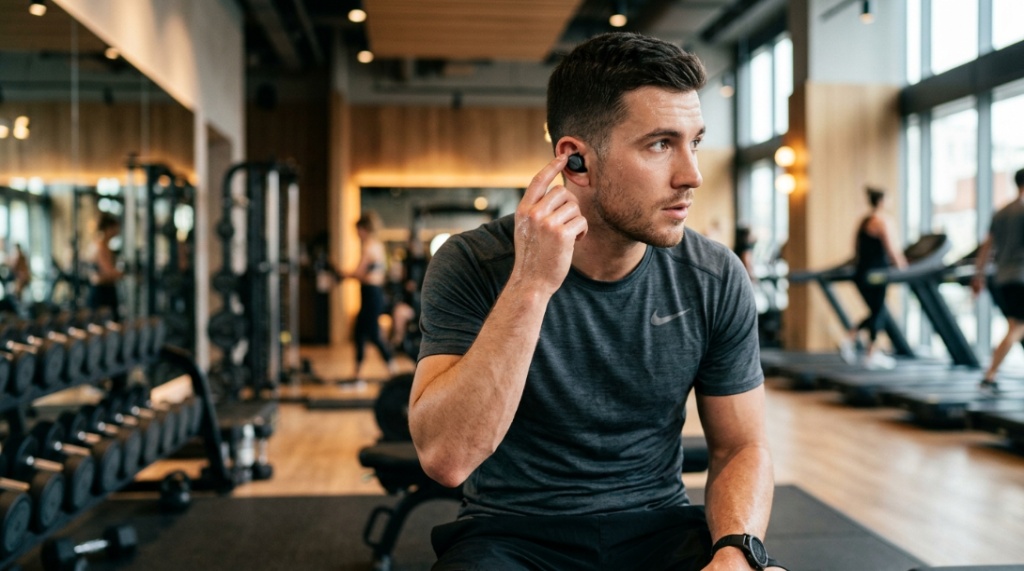
The Bluetooth headphone that sounds perfect at your desk becomes a liability the moment you start moving — wires of any kind are extinct in sport audio, but wireless doesn’t automatically mean exercise-ready. The best Bluetooth headphones for exercise combine three engineering priorities that standard wireless headphones ignore: connection stability during body movement that creates antenna-blocking interference patterns, fit retention through repetitive impact forces that standard ear tips can’t withstand, and materials that resist the salt-moisture-heat combination unique to exercising bodies. Sports headphones require Bluetooth implementation optimized for bodies in motion — not bodies sitting still.
Best Bluetooth headphones for exercise are wireless sport headphones using Bluetooth 5.0 or higher with antenna designs optimized for maintaining connection during full-body movement, combined with sport-specific fit systems (hooks, wings, or deep-seal designs), IPX5+ moisture resistance, and audio tuning that emphasizes motivational bass and energy over neutral accuracy. Sports headphones serve a different master than listening headphones—performance under physical stress replaces audiophile refinement as the primary design constraint.
This guide evaluates Bluetooth headphones specifically through the exercise lens — where connection reliability, fit security, and sweat survival determine daily satisfaction more than frequency response curves or soundstage width ever could.
Why Do Regular Bluetooth Headphones Fail During Exercise?
Regular Bluetooth headphones fail during exercise because: arm movement blocks antenna signal paths causing audio dropouts, sweat bridges electrical contacts causing shorts and corrosion, standard ear tips lose friction when ear canals become moist, and battery drain increases with the higher volume needed to overcome gym ambient noise — shortening sessions unexpectedly.
Exercise-specific Bluetooth challenges:
- Signal interruption from body position: Your body is a Bluetooth signal absorber. When your phone is in a pocket and your arm moves between phone and earbud, signal drops momentarily. Sport headphones use antenna placement and Bluetooth 5.2+ multipath processing to maintain connection through body-position changes.
- Moisture on contacts: Sweat is conductive. When it bridges electrical contacts on earbuds, it can cause momentary shorts that trigger disconnection events. Sport headphones use nano-coating and recessed contacts to prevent sweat-bridging.
- Fit failure cascade: When ear canals sweat, friction decreases between silicone tip and skin. The earbud loosens. A loose earbud breaks its acoustic seal — reducing bass and requiring higher volume. Higher volume drains battery faster. The cascade starts with inadequate sport-fit design.
- Temperature effects on battery: Exercise raises body temperature, warming earbuds beyond optimal lithium battery operating range. Combined with high-volume demands, battery life during exercise is typically 15–20% shorter than the rated specification (which assumes room-temperature stationary use).
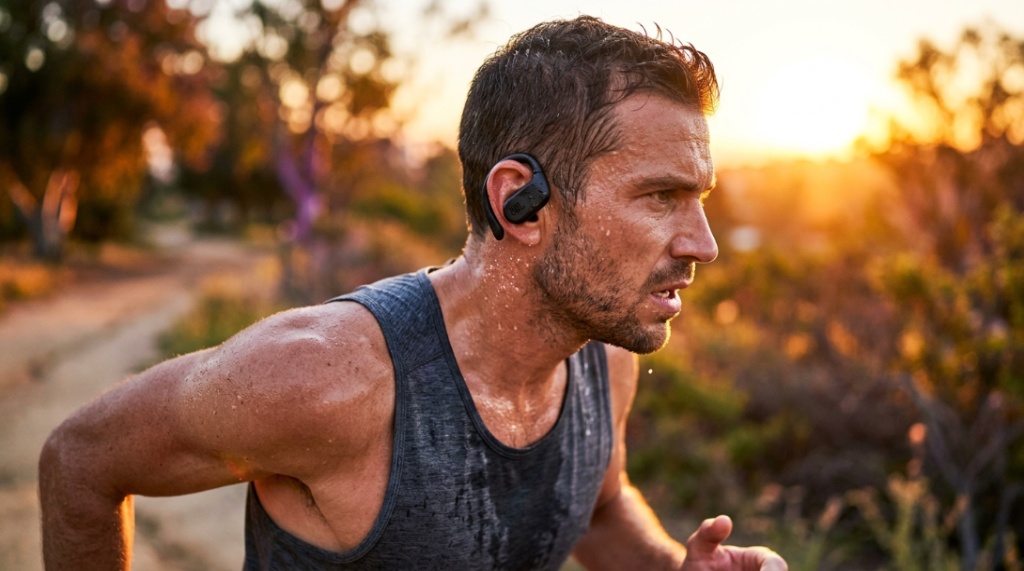
What Bluetooth Version and Features Matter for Sport Use?
Bluetooth 5.2 or higher provides the connection stability needed for exercise — offering multipath signal processing, faster reconnection after momentary drops, and lower power consumption that preserves battery during demanding high-volume gym sessions. Below Bluetooth 5.0, exercise-related audio dropouts become noticeably more frequent.
| Bluetooth Feature | Why It Matters for Exercise | What to Look For |
|---|---|---|
| Version 5.2+ | Better signal through body interference, faster reconnection | Spec sheet: “Bluetooth 5.2” or “Bluetooth 5.3” minimum |
| Multipoint connection | Switch between gym TV and phone without re-pairing | “Multipoint” or “Dual device connection” in features |
| Stable connection at distance | Phone in locker/bag while training on floor — needs 30ft+ range | Reviews mentioning connection stability at gym distances |
| Low-latency mode | Watching gym TV screens without lip-sync delay | “Game mode” or “Low latency” option in companion app |
| Quick reconnection | If signal drops momentarily, resumes without manual intervention | Bluetooth 5.2+ handles this automatically vs older versions requiring re-pair |
Practical note: Bluetooth range claims (10m standard) assume clear line-of-sight. In gyms with metal equipment, other Bluetooth devices, and WiFi interference, effective range drops to 5–8m. Keeping your phone within this range (armband, waistband, nearby shelf) prevents most connectivity issues regardless of Bluetooth version.
Which Sport Headphone Form Factor Fits Your Exercise Type?
True wireless earbuds with hooks/wings for gym and functional training. Neckband-style for running where you want zero risk of dropping and losing an earbud. Bone conduction for outdoor road running where environmental awareness is safety-critical. Each form factor serves different movement patterns and risk profiles.
- True wireless + hooks/wings (gym, CrossFit, HIIT): Maximum freedom of movement. No cable restriction. Secure anchoring handles directional changes and impact. Risk: dropping during removal if fumbled near drains or equipment. Best for: indoor varied-movement training.
- Neckband style (running, cycling): Band sits around neck connecting both earbuds. Zero risk of losing individual earbuds if they dislodge. Slightly less freedom than true wireless. Magnetic earbuds snap to neckband when not in ears. Best for: outdoor training where losing an earbud is costly/dangerous.
- Bone conduction (road running, outdoor cycling): Nothing in ears. Full environmental awareness. Ears completely open for traffic, other runners, dogs, and hazards. Trade-off: sound quality and bass reduced. Best for: outdoor road activities where safety demands hearing your environment.
- Over-ear (weightlifting only): Maximum sound immersion for lifting motivation. Impractical for any cardio or dynamic movement. Sweat management is challenging. Best for: dedicated strength athletes who don’t mix cardio into lifting sessions.
The best headphones for working out guide evaluates each form factor with exercise-specific testing across popular training styles.
How Do You Choose the Right Ear Tip for Exercise Security?
Memory foam ear tips provide better exercise retention than silicone because foam expands to fill the ear canal completely — maintaining friction even when sweat reduces surface adhesion. Use one size larger than your casual-listening size to account for the reduced friction wet ears create during intense sessions.
Ear tip strategy for exercise:
- Memory foam tips (best for exercise): Compress during insertion, expand to seal ear canal fully. Maintain grip when ear canals are sweaty because foam conforms to canal shape rather than relying on surface friction. Replace every 2–3 months (foam degrades faster than silicone from moisture exposure).
- Silicone tips — one size up: If you use medium tips casually, try large for exercise. The tighter fit compensates for sweat-reduced friction. The trade-off: slightly more canal pressure (acceptable for 1-hour exercise sessions).
- Double-flange silicone tips: Two concentric flanges create dual seal points — if one breaks seal from sweat, the other maintains retention. More secure than single-flange but some users find them uncomfortable for extended wear.
- SpinFit or comply alternatives: Third-party ear tips specifically designed for exercise with textured surfaces that maintain grip in wet conditions. Available for most popular sport earbud models ($12–$20 for multi-size packs).
What Battery Life Do You Need for Exercise Headphones?
For typical 45–90 minute gym sessions: 5+ hours of earbud battery covers multiple sessions between charges. For marathon training (2–4+ hour runs): 8+ hours provides safety margin. Always add 20% to your session time for the battery buffer — exercise demands higher volume (more battery drain) than seated listening.
- Standard gym sessions (45–90 minutes): 5-hour earbud battery = 3–4 sessions between charges. Charge case provides 3–5x additional charges. Weekly case charging handles most gym routines.
- Long-run training (2–4 hours): 7–8 hour battery minimum. Provides full training coverage with buffer for warm-up/cool-down audio. Quick charge (10 min = 1 hour) provides emergency backup for forgot-to-charge situations.
- Ultra-endurance (4+ hours): 10+ hour battery or mid-session charging strategy. Some earbuds charge in case during mid-run breaks. Alternatively: bone conduction headphones offer 8–10 hours in a single charge without case interruption.
Battery reality for exercise: manufacturer ratings assume 50% volume at room temperature. At 70–80% volume (typical for overcoming gym ambient noise) in warm conditions (body heat + exercise), expect 15–25% less than rated battery life. A “6-hour” earbud delivers approximately 4.5–5 hours during actual intense exercise.
How Important Is ANC for Exercise Headphones?
ANC is a gym bonus (blocks loud overhead music and equipment noise), a running negative outdoors (blocks safety-critical traffic sounds), and a cycling danger (eliminates vehicle and cyclist awareness). Evaluate ANC for exercise by WHERE you train — indoor gym = helpful, outdoor anything = use transparency mode or skip ANC entirely.
- Indoor gym — ANC helpful: Blocks gym music you didn’t choose, weight-dropping noise, and grunting from nearby lifters. Creates personal audio zone for focus. Most gyms are 70–85dB — ANC brings this to manageable 45–55dB, improving your music clarity without dangerous volume levels.
- Outdoor running — ANC dangerous: Blocking traffic, bikes, dogs, and other runners creates genuine safety risk. ALWAYS use transparency mode or bone conduction for outdoor running. No music quality improvement justifies not hearing an approaching vehicle.
- Home gym/garage — ANC unnecessary: You control the noise environment. Save battery by running without ANC. Use ANC only if external noise (traffic, neighbors) penetrates your training space distractingly.
What Sound Tuning Works Best for Different Exercise Types?
Heavy bass for lifting (drives intensity and rep timing), balanced-energetic for running (rhythmic drive without fatiguing treble), and podcast-optimized (clear mids) for steady-state cardio where entertainment content replaces music. Many sport headphones offer switchable EQ profiles for different training types.
- Weightlifting: Maximum bass emphasis. Deep sub-bass provides visceral intensity during heavy sets. Boosted upper-mids add aggression to metal/rap workout playlists. Think “concert front row” energy.
- Running: Moderate bass for cadence without overpowering. Clear rhythm section for pace-matching. Slightly reduced treble to prevent ear fatigue during 30–60 minute continuous exposure at elevated volume.
- HIIT/CrossFit: Energetic all-around signature with punchy, fast bass response (not slow, boomy bass — which smears during rapid movement). Energy in the 2–4kHz range for motivational drive during high-effort intervals.
- Yoga/stretching: Neutral, relaxed signature. No aggressive bass needed. Clear vocals for instructor-led sessions. Lower volume capability for awareness of breathing and environment.
- Steady-state cardio (bike, elliptical): Podcast-optimized: clear vocals, moderate bass, minimal fatigue. Duration demands (45–60 minutes continuous) mean treble harshness and excessive bass both cause fatigue. Balanced presentation wins for content consumption during cardio.
If you are shopping for an active partner or looking to surprise someone who loves working out, high-quality audio gear makes a perfect present. For more inspiration, check out our curated guide on how to Buy Gift Gadgets for Women That Matter to find the perfect match.
Conclusion
The best Bluetooth headphones for exercise prioritize three things consumer headphones don’t: connection stability through body-interference patterns (Bluetooth 5.2+), fit retention during sweaty high-impact movement (hooks or wings with proper ear tips), and moisture resistance beyond splash-level (IPX5+ for real sweat survival). Sound quality matters — but only after durability and fit are guaranteed. Choose your form factor based on your training type (true wireless for gym, neckband for running, bone conduction for roads), maintain post-workout, and budget for sport-specific rather than repurposing consumer earbuds that’ll die in 4 months of honest training.
Find exercise-tested sports headphones matched to your training style at the best Bluetooth headphones for exercise guide with workout-specific fit and durability testing.
What’s your primary exercise type and biggest headphone frustration during training? Share in the comments for targeted recommendations matched to your specific workout style.
Frequently Asked Questions
Do Bluetooth headphones fall out during running?
Standard consumer earbuds: frequently. Sport-specific earbuds with hooks or wingtips: rarely. The difference is the mechanical anchor — hooks/wings create retention independent of ear canal friction. Running generates repetitive vertical forces that work standard tips loose over hundreds of foot strikes. Properly secured sport earbuds maintain position through marathon distances without adjustment.
Is Bluetooth 5.0 good enough for gym use?
Adequate but not optimal. Bluetooth 5.0 handles most gym situations but may experience occasional dropouts when body position blocks signal between phone and earbud. Bluetooth 5.2+ provides measurably fewer dropouts during exercise through improved multipath processing. If buying new, choose 5.2+ when available — the upgrade costs nothing at current pricing.
Can sweat permanently damage Bluetooth headphones?
Yes — sweat’s salt content creates galvanic corrosion on metal contacts, crystallizes in speaker mesh blocking sound, and degrades silicone seals over months of exposure. This damage is cumulative and irreversible. IPX5+ resistance slows this process, and post-workout wiping prevents salt accumulation — but no headphone is immune to sustained daily sweat exposure indefinitely. Plan for 18–24 month replacement cycles with proper maintenance.
Should I buy expensive or cheap sport headphones?
Mid-range ($70–$130) offers the best value for exercise. Below $50: IP ratings and fit security often suffer, leading to faster replacement cycles. Above $200: you’re paying for audio quality and premium features that exercise environments don’t fully utilize. The $70–$130 sweet spot delivers sport-grade durability and security without premium-audio pricing that gets wasted in noisy gym environments.
Are neckband Bluetooth headphones outdated for exercise?
Not outdated — purpose-specific. Neckband headphones eliminate the risk of losing individual earbuds during outdoor training (they stay attached to the band). For runners and cyclists, this security against loss matters more than the slight freedom-of-movement advantage true wireless provides. True wireless dominates gym use; neckbands remain valid for outdoor exercise where earbud loss is costly.
How do I keep Bluetooth connection stable at the gym?
Keep phone within 5–8 feet (pocket, armband, or nearby shelf). Avoid placing phone behind your body during exercises. Choose headphones with Bluetooth 5.2+. If dropouts persist: try switching which pocket carries the phone (signal path may be clearer from a different body angle). Some earbuds have left-dominant or right-dominant antenna — keeping the dominant ear closer to the phone helps.