
Riding the Atlantic breakers off the North Carolina coast is an experience unlike any other. From the gentle rollers at Wrightsville Beach to the punchier shorebreak around Cape Hatteras, the Tar Heel State offers some of the most consistent skimboarding conditions on the East Coast. But getting to those prime zones means hauling your board across hot sand, through crowded parking lots, and strapped to your vehicle. Without proper protection, your skimboard takes a beating from UV rays, road debris, and that inevitable clatter when you set it down on the jetty. If you’ve been searching for the right protection, finding a reliable skimboard bag for NC riders is the difference between a board that lasts for years and one that turns into a warped, delaminated piece of fiberglass before the summer ends.
This guide breaks down everything you need to know before buying a bag—from size specifications and material durability to climate considerations unique to riding in North Carolina. We’ll cover how to match a bag to your board shape, why padding matters for specific NC transit scenarios, and what features actually hold up against salt, sand, and sun.
Key Takeaways
- Measure before you buy: Always measure your skimboard’s exact length and width, then account for added thickness from traction pads or fins before selecting a bag size.
- Prioritize UV and heat resistance: NC sun is intense; a bag with reflective or UV-treated fabric prevents board warping and color fading during long beach days.
- Consider ventilation for wet storage: Boards stored in humid coastal air with a sealed bag can trap moisture; look for breathable panels or drain holes to prevent mold and delamination.
- Match padding to your travel style: A lightweight sleeve works for local trips, but a thickly padded bag is essential if you’re transporting your board on roof racks or checking it as luggage.
Why North Carolina Riders Have Specific Bag Needs
NC skimboarding isn’t a one-size-fits-all sport. The geography creates distinct riding environments, and each one demands different things from your gear bag. On the southern beaches—places like Carolina Beach and Sunset Beach—you’re dealing with longer, flatter rides and boards that are typically bigger, measuring in the 52-to-56-inch range. These boards need bags with generous internal volume to accommodate their wider noses and thicker cores.
Move up the coast toward the Outer Banks, and the conditions shift. The steeper, faster shorebreak around Nags Head and Kill Devil Hills favors smaller, more maneuverable boards in the 48-to-51-inch range. Riders here often carry their boards farther across rugged dune crossings and over wooden walkways, making lightweight, easy-carry options with comfortable shoulder straps more valuable.
Heat and UV Exposure on NC Beaches
North Carolina averages over 200 sunny days per year, with summer heat index values frequently topping 100 degrees Fahrenheit. When you leave your skimboard sitting in the sun while you eat lunch or swim, the deck temperature can easily reach 150 degrees. A bag with a light-colored exterior or reflective coating helps deflect that heat. Darker bags absorb heat faster, which can soften epoxy resins and cause subtle warping that ruins your board’s performance on the water.
How to Measure Your Skimboard for the Perfect Bag Fit
Getting the right fit starts with accurate measurements. Place your skimboard on a flat surface and run a tape measure from the very tip of the nose to the tail’s end—this is the true length. Next, measure the widest point across the board’s width. For most riders, the width measurement matters more than they realize; a bag might list the right length but offer a tight fit if your board is unusually wide for its length.
You also need to account for modifications. If you’ve added a thicker traction pad, that can reduce the usable internal space. The same goes for the bag’s internal lining—some padded bags have nearly 1/4 inch of foam that eats into interior dimensions. A board that measures exactly 52 inches will not fit into a bag listed at exactly 52 inches. You want a bag that provides roughly 2 to 3 inches of extra length beyond your board’s actual measurement.
Key Bag Features to Look For
Not all skimboard bags are built with the same priorities. Your riding style and travel habits should dictate which features matter most to you. Here are the primary differences to understand before making a purchase decision.
Padding and Protection Levels
Bag padding generally falls into three tiers. Sleeves are minimal—no padding at all—designed simply to keep dust and sand off the board during short car rides. Lightly padded bags offer foam between 3mm and 5mm thick, which protects against scuffs and minor impacts during casual handling. Heavy-duty bags feature 10mm or more of closed-cell foam, offering genuine shock absorption for air travel, roof racks, or trucks where boards slide around in the bed during transit.
If you only skimboard within a 20-mile radius of your home, a lightweight option might be sufficient. But if you regularly drive parkways to different beaches or travel for competitions, you need to maximize protection. The tradeoff is weight and bulk—heavy-duty bags often weigh three to four times as much as sleeves.
Zipper and Closure Quality
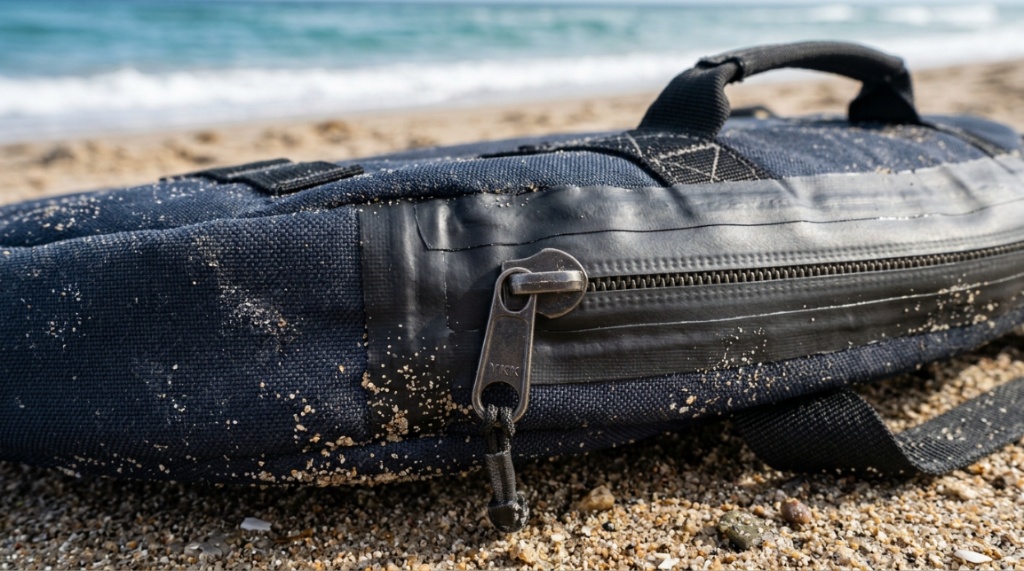
The zipper is the most common point of failure on skimboard bags. Lower-end bags use standard dress zippers that corrode quickly in salt spray, eventually jamming or tearing away from the fabric. Look for corrosion-resistant zippers. Many quality bags use coated zippers or plastic-toothed zippers that resist seawater damage much better than exposed metal hardware.
Additionally, consider whether the bag has zipper flaps—fabric strips that cover the zipper track. These prevent sand from working its way into the zipper mechanism, which is a constant issue when you’re setting your board down on the beach.
Carrying Options
The way you carry your board matters more than you might think. Most skimboard bags feature a single padded carry handle positioned at the balance point. If the bag is long—over 55 inches—that single handle puts significant strain on your arm, especially if you have a heavier wooden board. Look for bags with an extended shoulder strap or backpack-style straps for longer walks.
Some higher-end bags include a daisy-chain mounting system or compression straps on the side. These aren’t just cosmetic features. Compression straps let you secure boards of different thicknesses while also providing a grip point on the exterior of the bag for easier handling.
Comparing Bag Types: Sleeves, Padded Bags, and Travel Cases
| Bag Type | Typical Padding | Best Use Case | Weight Added | Protection Level |
|---|---|---|---|---|
| Sleeve | None (0mm) | Garage storage, car trunk short trips | 0.5 – 1 lb | Minimal—dust and light scratches only |
| Lightly Padded | 3mm – 5mm foam | Local beach trips, campus carry | 1 – 2.5 lbs | Good—protects against scuffs, drops from waist height |
| Heavy-Duty Padded | 10mm+ closed-cell foam | Air travel, roof racks, truck beds | 3 – 6 lbs | Excellent—shock absorption for hard impacts |
| Rigid Travel Case | Hard shell + foam insert | Airline check-in, freight shipping | 8 – 15 lbs | Maximum—protects against extreme crushing forces |
Rigid travel cases are overkill for most NC riders, but they make sense if you fly regularly to skimboarding competitions on the West Coast or Gulf Coast. For everyone else, a heavy-duty padded bag handles the vast majority of travel scenarios without the extreme bulk of a hard shell.
Climate and Storage Considerations for NC Owners
North Carolina’s humidity is a real factor in board longevity. It’s not uncommon for relative humidity along the coast to sit above 80% for weeks at a time during summer. If you zip a wet skimboard into a sealed bag and leave it in a hot car trunk for two days, you create the perfect environment for mold growth and resin deterioration.
Choose a bag with ventilation. Many quality bags feature mesh gussets or vent holes along the bottom edge. These allow trapped moisture to escape gradually while still protecting the board from direct sunlight. For longer-term storage between sessions, store your board in the bag but leave the zipper partially open to allow airflow.
Also consider how NC winters affect your gear. During the off-season from November through February, boards are frequently stored in garages, attics, or storage units. These spaces swing in temperature dramatically. A bag with a thermal reflective lining helps moderate temperature changes, preventing the epoxy from becoming too brittle in the rare freezing night or overly soft in a warm garage during a January heat wave.
Common Mistakes When Buying a Skimboard Bag
One of the most frequent errors riders make is buying a bag designed for surfboards. Surfboard bags are longer and narrower, with different proportions that don’t match the stubby, wide profile of most skimboards. A skimboard will slide around inside a surfboard bag, and the padding won’t be positioned at the board’s stress points.
Another mistake is ignoring the shoulder strap. Some bags come with a simple loop handle only, and riders discover on their first dune crossing that the handle layout makes carrying painful. Check product photos carefully. You want a bag with at least one adjustable, padded shoulder strap unless you only plan to carry the bag a few feet from car to sand.
Finally, avoid bags with zippers that run the full length of both sides unless the bag opens fully flat. A bag that only opens at the tail end but lacks a wide opening at the nose makes it difficult to slide your board in without scraping the rails against the zipper teeth. Look for bags with a U-shaped zipper opening or a generously sized opening that accommodates the full width of the board.
Frequently Asked Questions
Can I use a wetsuit bag or surfboard bag for my skimboard?
Technically, yes—any bag that is long enough will physically hold the board. However, surfboard bags and wetsuit carriers lack proper interior proportions for skimboards. The bag will be too narrow, leaving your skimboard’s wide rails unprotected and the board prone to shifting. A dedicated skimboard bag is a better investment for long-term board protection.
How often should I replace my skimboard bag?
With reasonable care, a quality bag lasts anywhere from two to five years depending on usage frequency. Salt water and UV exposure are the main causes of degradation. Rinse the bag with fresh water after each beach trip and let it air dry fully before storage. When the zipper starts catching, padding flattens, or fabric begins to tear, it’s time to replace it—a compromised bag offers negligible protection.
Should I buy a bag that fits my current board or my next board?
If you plan to advance in the sport and expect to buy a different-sized board within the next year, purchase a bag that accommodates the larger size. A bag that has a few extra inches of space won’t harm board protection, but an undersized bag will eventually damage your board as you try to force it inside.
Is it safe to travel with my skimboard in a padded bag?
For road trips and car travel, a heavy-duty padded bag offers adequate protection. For airline travel, you need a rigid case specifically rated for aircraft baggage handling. Even the thickest soft bag won’t protect against a dropped suitcase stacking or conveyor belt crushing forces. Airlines have size restrictions on sports equipment, so measure your bag fully packed before booking a flight,Before hitting the coast with your new gear, make sure your equipment matches the local surf conditions by checking out how to Pick the Right Skimboard for Oregon Beaches.
Are expensive bags worth the extra cost?
Generally, yes. High-end bags use marine-grade fabric with UV stabilizers, corrosion-resistant zippers, dense closed-cell foam, and reinforced stitching. These features directly address the conditions that destroy cheaper bags within a year of coastal use. If you ride consistently through the NC season, the cost per use of a quality bag is minimal.
Conclusion
Choosing the right skimboard bag for NC riders comes down to honestly assessing how you ride and how you travel. Measure your board precisely, account for the NC sun and humidity, and prioritize ventilation and corrosion resistance with the same seriousness you apply to board selection. A durable padded bag protects your skimboard chassis during transit and extends the life of your investment significantly. When you consider the cost of replacing a delaminated or warped board, the price of a quality bag is one of the cheapest upgrades you can make to your gear setup. Take these selection criteria with you when you shop, and you’ll find a bag that survives the Carolina coast—and the moments you spend trying to get to it.