Picture this: it’s 5:30 AM on a Saturday, you’re heading to Lake Lanier, and you open your truck bed to grab your favorite flipping stick. Instead of a quick grab-and-go, you spend ten minutes untangling a mess of line, guides, and handles that looks like a spaghetti bowl exploded. Sound familiar? For anglers across the Peach State—from the Altamaha River to Lake Seminole—rod chaos is a universal frustration. The problem isn’t a lack of gear; it’s a lack of a system. In this guide, we’ll break down practical, Georgia-specific solutions to keep your rods safe, accessible, and ready for action, ensuring you spend more time casting and less time cursing.
Why Is Proper Rod Storage Critical for Georgia’s Climate?
Georgia’s subtropical climate is brutal on fishing equipment. The combination of high humidity, intense UV rays, and extreme temperature swings can warp handles, weaken graphite blanks, and corrode guides faster than you might think. Leaving rods loose in a truck bed or leaning against a damp garage wall is a recipe for expensive replacements.
The Hidden Damage of Humidity
From Savannah to Athens, humidity often sits above 70% during summer months. This moisture seeps into cork handles, causing them to rot, and attacks the epoxy holding your guides in place. Over time, this leads to cracked guides and loose reel seats—catastrophic failures when you’re fighting a trophy striper.
UV Exposure and Blank Degradation
Direct sunlight degrades the resin in graphite rods. A rod left on a boat deck for a few Georgia summers becomes brittle and prone to snapping. Proper organization means keeping rods out of direct sunlight when not in use, whether that’s in a covered rack or a UV-protected storage bag.
Temperature Fluctuations in Vehicles
If you keep rods in a car or truck, Georgia’s summer heat can easily exceed 140°F inside the cabin. This heat can soften the adhesive in the rod’s construction, leading to delamination. A dedicated, organized rack that allows air circulation minimizes heat retention and prevents warping.
What Are the Best Storage Solutions for Small Spaces?
The best storage solution depends on your living situation and how you primarily fish. However, the core principle remains the same: rods must be secured horizontally, vertically, or diagonally without pressure points that can cause a set (a permanent bend) in the blank.
Wall-Mounted Horizontal Racks
For apartment dwellers or those with a two-car garage, horizontal wall racks are a space-saving lifesaver. These systems mount directly to studs and hold rods parallel to the floor. You can fit eight to ten rods on a single rack, keeping them out of the way while leaving them easily accessible.
- Pros: Keeps rods straight, protects them from bumping, and frees up floor space.
- Cons: Requires drilling into walls and may not fit longer surf rods.
Ceiling-Mounted Hoist Systems
If your garage is packed with kayaks, tools, and a boat, look up. Ceiling hoists allow you to store rods flat against the ceiling, completely out of the way. This is a great option for anglers with 10+ rods who rarely use most of them in a single trip.
Freestanding Rod Towers
Freestanding towers take up minimal floor space (usually 2×2 feet) and can store 12-20 rods vertically. These are perfect for tackle rooms or garage corners. Just ensure the rod tips have secure guides to prevent them from slapping together and fraying your lines,Once you have your tackle and rods properly sorted for your local lake or river trips, make sure your watercraft is up to task by learning How to Compare Top Fishing Kayaks Before Buying before hitting the water.
How to Organize Rods for Truck and SUV Transport
Transporting rods is where most damage occurs. Bouncing around in the bed or sliding across the back seat can crack ferrules and snap tips. The easiest way to protect your investment is to utilize a dedicated in-vehicle storage system.
The PVC Pipe DIY Solution for Trucks
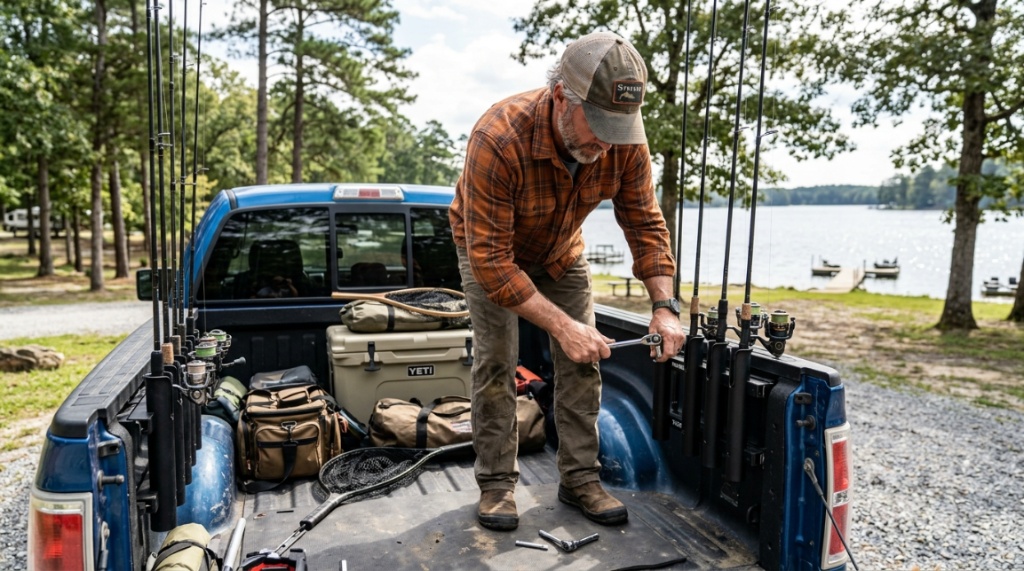
One of the most durable and affordable solutions for pickup trucks is constructing a PVC rod holder. You can mount a section of 4-inch PVC pipe vertically in the bed, lined with foam to cushion the rod handles. The rods slide in handle-first, with the tips extending up into the air. Secure the setup with a bungee cord at the top to prevent bouncing.
In-Cab Consoles for SUVs
For SUV owners, a floor-mounted console that fits between the driver and passenger seats is ideal. These usually have slots for 6-10 rods and are weighted to stay put. They keep rods inside the climate-controlled cabin, protecting them from theft and weather.
Using Rod Gloves and Sleeves
Before placing rods in any transport rack, invest in rod sleeves. These padded sleeves protect the guides and prevent them from interlocking. It is the best $20 you will spend for peace of mind on a 3-hour drive to Lake Eufaula.
Which Type of Rack Suits Your Fishing Style?
Your fishing style dictates your organizational needs. A bass pro fishing plastics all day has different needs than a surf angler targeting whiting on Tybee Island. Choosing the wrong system leads to frustration and clutter.
Racks for Bass and Kayak Anglers
Kayak anglers need versatility. In a kayak, you don’t have room for a rack; you need pad-eye straps or flush-mount holders. On land, a portable collapsible rack allows you to set up your rods at the launch point while you prepare your kayak.
Racks for Inshore and Offshore Boats
Boaters need corrosion-resistant aluminum or stainless-steel racks. Saltwater air corrodes standard steel instantly. Look for gunnel-mounted racks or T-top holders that keep rods positioned horizontally to avoid snagging lines when trolling.
Racks for Bank and River Anglers
Bank anglers walking the banks of the Chattahoochee need a lightweight, portable rod holder that doubles as a walking stick or a bank spike. The key here is minimizing weight and maximizing accessibility on the water.
When Should You Use Vertical vs. Horizontal Storage?
Choosing between vertical and horizontal storage is a critical decision. The wrong choice can lead to “rod set”—a permanent curvature in the graphite that ruins casting accuracy.
Understanding Rod Set
If you store rods vertically for long periods, the weight of the reel and the leverage of the long blank can cause the rod to take a set. If you store them horizontally with a mid-point support, you eliminate this leverage. For expensive rods ($150+), horizontal is always safer.
Space Efficiency for Vertical Storage
If you have more than 15 rods, vertical storage is often the only practical option. To prevent rod set, use a bottom holder that supports the full length of the handle and a top guide that cushions the tip. Rotate your rods seasonally to change the resting angle.
Storing Rods in Rod Socks vs. Exposed
Always use rod socks in vertical storage. The friction of rods rubbing together in a tower can wear down the paint and damage the guides. Socks add a layer of cushioning and prevent tangles. A rod sock is a non-negotiable accessory for long-term storage.
How to Design a Dedicated Fishing Tackle Room
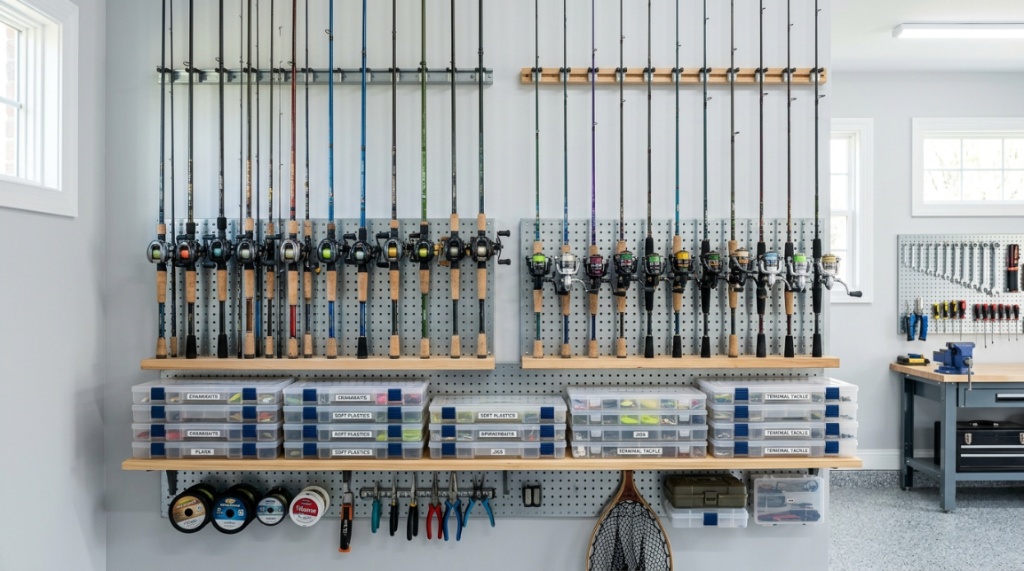
For the serious Georgia angler, a dedicated tackle room is the ultimate goal. This allows for the perfect climate control and organization that protects your gear year-round. You don’t need a mansion; a small spare bedroom or a corner of the garage works fine.
Step 1: Control the Climate
Install a dehumidifier or a small air conditioner. Keeping the humidity below 50% protects reels from rust and rods from rot. This is the most important step, especially during Georgia’s muggy summers.
Step 2: Build a Multi-Tiered Wall System
Install a pegboard or slatwall. Use heavy-duty hooks to hold rod racks and reels. This keeps everything visible and off the floor, making it easier to inventory your gear and clean the room.
Step 3: Zone Your Layout
Create zones: a “finesse” zone for spinning rods, a “power” zone for baitcasters, and a “carp/inshore” zone. This organizational logic reduces the time you spend searching for equipment. Tag the rods with labels indicating their line weight and lure rating.
What Are the Best Practices for Long-Term Seasonal Storage?
When the winter months slow down fishing, or you head north for the summer, you need to winterize your rods. Simply throwing them in a shed isn’t enough.
Cleaning and Loosening Reels
Always clean your reels and loosen the drag before storage. Tight drags can warp washers over time. Wipe down the rods with a mild soap solution to remove dirt and salt residue.
Storing Optics and Electronics
Storing rods is linked to storing the electronics attached to them. Remove all electronics (depth finders, lights, rod sensors) and store them indoors where temperatures are stable. Cold and heat cycles can drain batteries and fog screens.
Positioning in the Rack
Store rods with the reel facing down to prevent dust accumulation on the line and reel seat. If storing horizontally, alternate the tips (one rod tip left, next rod tip right) to maximize space and prevent guide interference.
Where Should You Mount Rod Racks for Maximum Safety?
Safety is often overlooked in rod organization. A rod falling off a high shelf can be a safety hazard, and tripping over rods on the floor is dangerous. Proper mounting height is crucial.
Keeping Rods Out of High-Traffic Areas
Mount racks high on walls, above head level, to keep them out of reach of children and pets. Ensure the rack is securely anchored into wall studs—drywall anchors are not sufficient to hold the weight of multiple heavy rods.
Balancing Weight Distribution
When loading a wall rack, distribute the heavy rods evenly. Do not place all the heavy swimbait rods on one side; this can unbalance the mount over time, leading to a crash that damages the rods and the floor.
Securing the Rack Components
Check the rubber grommets on your rack periodically. They can dry out and crack in Georgia’s heat. Replacing them every two years ensures your rods sit snugly and don’t vibrate or slide during storms or earthquakes (yes, Georgia has small tremors occasionally).
Can You Build Your Own Rod Rack with PVC?
Absolutely. The DIY community heavily favors PVC for rod organization because it is cheap, waterproof, and easy to work with. You can build a custom rack for less than $30 in an afternoon.
Materials Needed for the DIY Project
- 10 feet of 4-inch PVC pipe
- One 4-inch PVC cap
- Foam pipe insulation
- PVC cement
- Plastic zip ties
Step-by-Step Assembly Guide
- Cut the PVC pipe into 5-inch sections.
- Glue the cap to the bottom of the entire length.
- Cut the foam insulation to fit inside the PVC sections.
- Secure the PVC sections to a wooden board or directly to the wall using zip ties.
- Insert rods handle-first so the weight rests on the foam, not the tip.
Finishing Touches for a Professional Look
Spray-paint the PVC a dark color to match your garage aesthetic or add a wooden faceplate to hide the pipe. This ensures your DIY solution doesn’t look like a plumbing accident.
Is It Worth Investing in Premium Rod Racks?
there is a trade-off between cost and durability. While a $20 DIY PVC rack works, premium racks offer features like locking mechanisms, padded yokes, and corrosion-proof finishes that are superior for harsh environments.
Comparing Aluminum, PVC, and Wood Racks
Aluminum is lightweight and resists rust but can dent. Wood looks great and is sturdy but requires sealing to prevent moisture damage. PVC is the workhorse but lacks aesthetic appeal. Let’s compare them:
| Material | Durability | Moisture Resistance | Price Point |
|---|---|---|---|
| Aluminum | High | Excellent | $$$ |
| PVC | Medium | Excellent | $ |
| Wood | Medium | Poor (needs sealing) | $$ |
Finding the Best Value for Your Budget
You don’t need a $500 premium system to get started. For most anglers, a $50 freestanding tower offers the most significant storage capacity per dollar. However, if you have a boat, spending money on a track-mounted system is a necessity for saltwater trips. If you are looking for a curated list of top-rated options that fit the Georgia lifestyle, checking out a comprehensive resource on the best fishing rod organization for Georgia anglers can save you hours of research.
Long-Term ROI on Gear Protection
Consider the cost of replacing a high-end rod: anywhere from $200 to $600. A well-built rack system will last for a decade if properly cared for. When you protect 10 rods, the average rack system pays for itself in the first year by preventing a single breakage or corrosion event.
How to Keep Rods from Tangling During Transport
Tangling is the number one time-waster on the water. This happens because rods are laid flat together without separation. You need to create physical barriers between the rods.
Using Individual Rod Sleeves
This is the most effective method. Each rod gets a padded sleeve. This prevents guide hooks from interlocking and lines from wrapping around handles. It takes 30 seconds to bag a rod and saves 10 minutes of untangling at the ramp.
The Bungee Cord Trick for Rod Bundles
If you are transporting rods in a boat, bundle them together with a bungee cord placed at the midpoint of the rods. This groups them tightly, preventing lateral sliding. Ensure the bungee is not too tight as to put pressure on the blanks.
Separating Reels from Rods
For storage, consider removing the reels from the rods. This reduces the overall length and bulk, making it easier to fit rods in racks. Store reels separately in padded boxes to protect the gear ratios and line spools.
What Are the Common Mistakes in Rod Organization?
Even well-intentioned anglers make these critical errors. Avoiding these will extend the life of your gear significantly.
Leaning Rods Against Walls
Never lean rods in a corner. This puts pressure on the tip, which can take a set and become permanently bent. Additionally, it makes them easy to knock over and step on.
Storing Rods with Lines Tight
Always loosen the drag and release the tension on the line before storing. Keeping tension stretches the line and can cause memory coils that lead to bird’s nests next time you cast.
Ignoring Guide Wear
When organizing, inspect the guides. A chipped guide insert can cut your line. If you notice wear, replace the guide before your next trip. Organization isn’t just about placement; it’s about maintenance.
Frequently Asked Questions
Is it better to store fishing rods vertically or horizontally?
Horizontally is always safer for the rod’s integrity as it prevents the blank from taking a set. However, vertical storage is acceptable for shorter periods or if you have limited space, provided the rods are supported at the base and near the tip.
How do you stop fishing rods from sliding in a truck bed?
Use a dedicated truck-bed rod holder made of PVC or aluminum. These lock the rod handles in place, preventing sliding. Additionally, use a cargo bar or tie-down straps to secure the rod tips against the bed walls.
Can I store fishing rods in a hot garage in Georgia?
Yes, but it is not ideal. Temperatures over 100°F can weaken rod epoxies. If you must use a garage, install a vent fan or dehumidifier, and keep rods away from the ceiling where heat accumulates. Never store them in direct sunlight.
How many fishing rods should I store together?
It is best to separate rods into groups based on length and action. Storing no more than 6 rods in a single bundle or section of a rack reduces tangles and makes it easier to retrieve a specific rod without disturbing others.
What is the best wood for building a rod rack?
Cedar is excellent because it is naturally moisture-resistant and smells great. Pine is affordable but must be sealed with polyurethane. Avoid pressure-treated wood as the chemicals can corrode rod finishes.
Do rod racks damage fishing rods?
Only if they are poorly designed or installed. Racks with hard plastic edges can dent blanks over time. Always choose racks with rubber, foam, or cork lining. Proper installation that avoids pressure points will not damage rods.
Conclusion
Organizing your fishing rods isn’t just about neatness; it’s a crucial part of protecting your investment and ensuring you are ready to fish at a moment’s notice. From the humid garages of Atlanta to the salt-laden air of Brunswick, Georgia anglers face unique environmental challenges that demand thoughtful storage solutions. Whether you choose a DIY PVC system, a boat-mounted rack, or a full tackle-room setup, the goal is to prevent damage, avoid tangles, and maximize safety. Start by assessing your space and rod count, then implement one of the strategies we covered today. Your future self—standing on the dock with a perfectly rigged rod in hand—will thank you. Don’t wait until a snapped rod ruins your next trip; sort out your system this week.