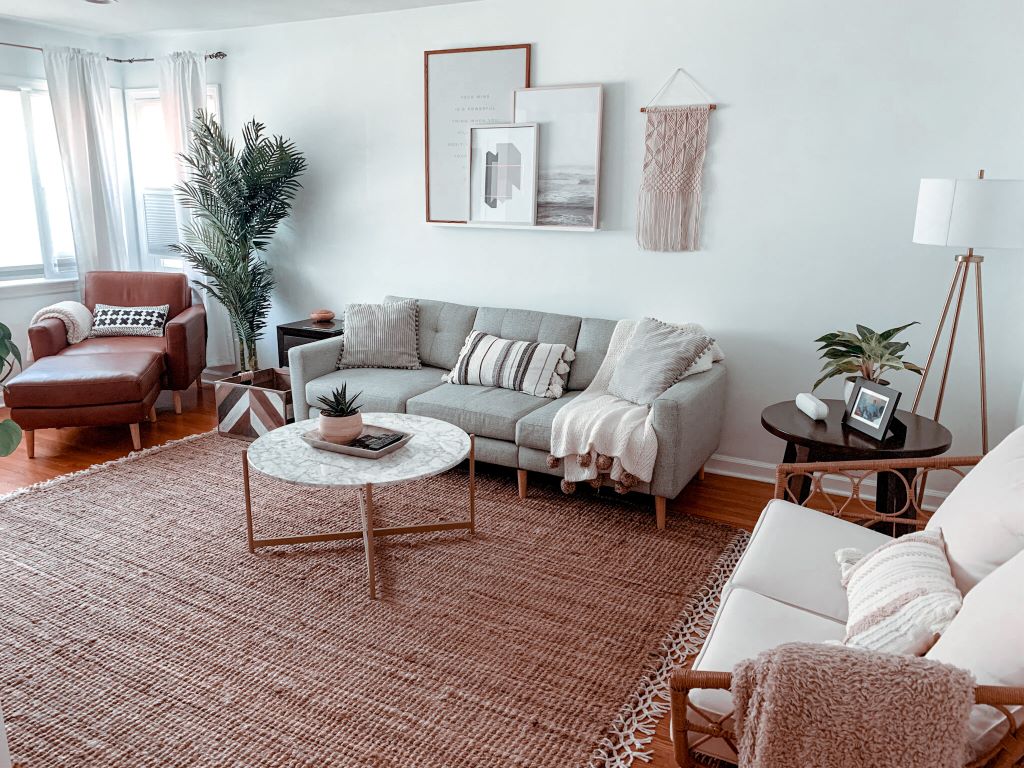
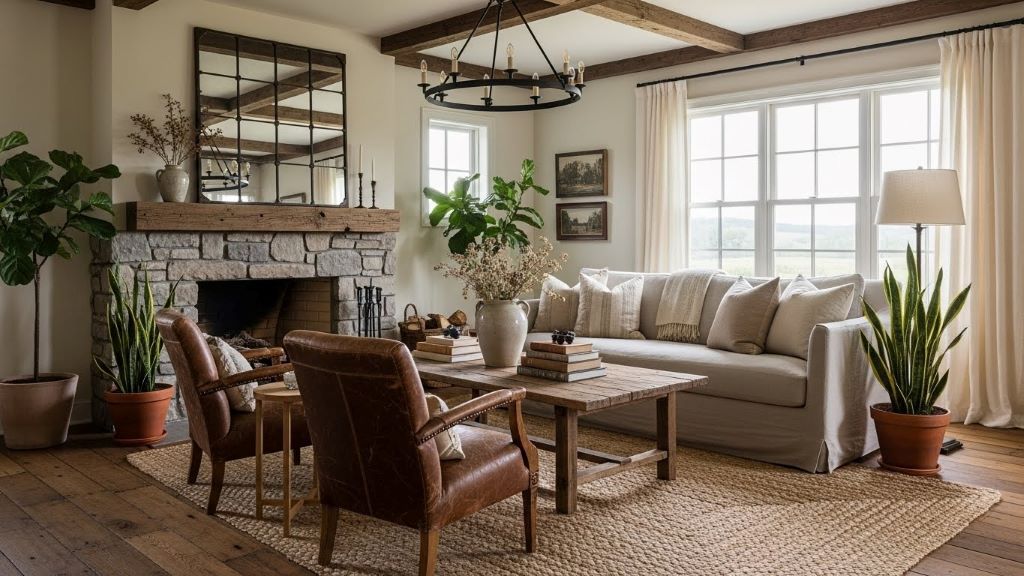
Creating a warm and inviting farmhouse rustic living room brings comfort and character into your home. This timeless design style combines natural materials, vintage charm, and cozy textures. Therefore, understanding how to select and arrange furniture pieces makes all the difference in achieving this beloved aesthetic.
Understanding Farmhouse Rustic Style
Farmhouse rustic design celebrates simplicity and authenticity. This style emphasizes natural wood, weathered finishes, and handcrafted details. Additionally, it creates spaces that feel lived-in and welcoming rather than overly polished.
The key lies in balancing rustic elements with modern comfort. You want your living room to look charming while remaining functional for everyday use. Consequently, selecting the right furniture pieces becomes essential for this balance.
Choosing Your Foundation Pieces
Selecting the Perfect Sofa
Your sofa serves as the living room’s anchor piece. For farmhouse rustic style, consider sofas with simple lines and neutral colors. Linen, cotton, or distressed leather upholstery works beautifully in these spaces.
Slip-covered sofas offer exceptional versatility. They provide easy maintenance while maintaining that casual, relaxed appearance. Moreover, you can change covers seasonally to refresh your room’s look without major investments.
Avoid overly sleek or modern silhouettes. Instead, look for pieces with slightly worn characteristics or vintage-inspired designs. These choices instantly add character and warmth to your space.
Coffee Tables That Make a Statement
Reclaimed wood coffee tables perfectly capture farmhouse rustic charm. Look for pieces with visible grain patterns, knots, and natural imperfections. These details tell a story and create visual interest.
Alternatively, consider vintage trunks or repurposed items as coffee tables. An old wooden chest or factory cart adds unique character. Furthermore, these pieces often provide valuable storage space beneath their surfaces.
Metal accents work well when combined with wood. Iron legs or hardware complement the rustic aesthetic without overwhelming it. This combination creates industrial farmhouse appeal that many homeowners love.
Incorporating Seating Options
Accent Chairs for Character
Accent chairs introduce personality into your farmhouse living room. Mismatched chairs create an eclectic, collected-over-time appearance. This approach feels authentic rather than overly coordinated.
Wingback chairs upholstered in grain sack fabric or ticking stripes add traditional farmhouse charm. Similarly, wooden rocking chairs or Windsor-style chairs provide classic appeal. These pieces work especially well near windows or in reading nooks.
Leather club chairs offer masculine balance to softer elements. Their worn patina develops beautifully over time. Additionally, leather furniture becomes more comfortable and attractive with age.
Benches and Ottomans
Wooden benches provide flexible seating while maintaining rustic aesthetics. Place them against walls or use them as alternative coffee tables. Their versatility makes them valuable additions to any farmhouse living room.
Upholstered ottomans add softness and comfort. Choose natural fabrics like burlap, linen, or cotton in neutral tones. However, don’t hesitate to incorporate subtle patterns like checks or stripes for visual variety.
Storage Solutions with Style
Functional Entertainment Centers
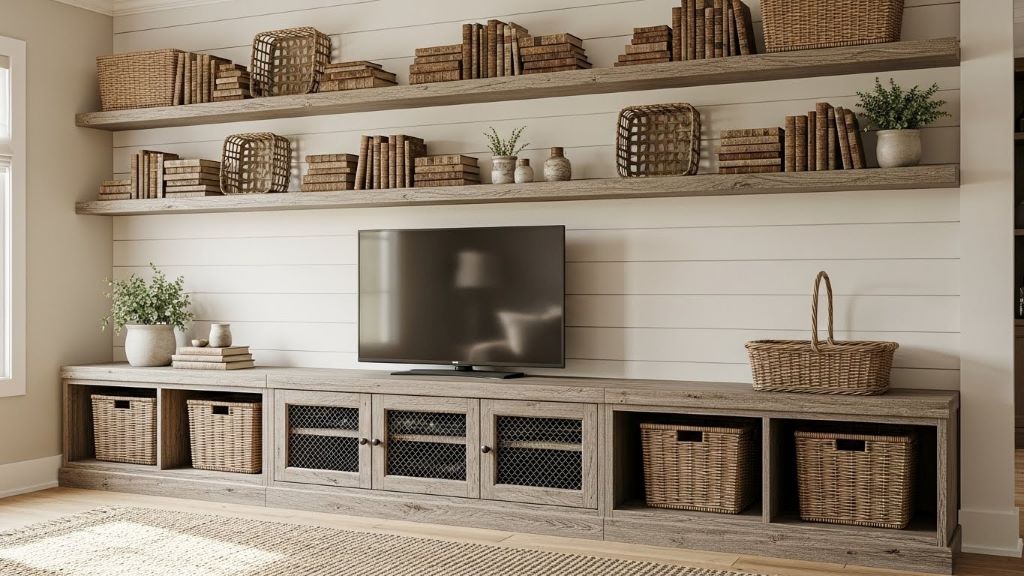
Entertainment centers should blend seamlessly with your rustic theme. Look for pieces crafted from reclaimed barn wood or distressed pine. Open shelving displays decorative items while closed cabinets hide electronics and clutter.
Vintage cabinets or armoires can be repurposed as media centers. These pieces add architectural interest and substantial storage capacity. Therefore, they solve practical problems while enhancing your room’s character.
According to Architectural Digest, incorporating vintage furniture pieces helps create authentic, layered interiors that feel genuinely collected rather than decorated.
Bookshelves and Display Units
Open shelving showcases your personality through books, plants, and treasured objects. Industrial pipe shelving or simple wooden boards on brackets maintain the rustic aesthetic. Additionally, these options remain budget-friendly for most homeowners.
Built-in shelving painted in soft whites or creams provides farmhouse charm. Style them with baskets, vintage finds, and natural elements. This approach keeps the look organized yet casual.
Material and Finish Considerations
Wood Selection and Treatment
Opt for woods with prominent grain patterns and natural characteristics. Pine, oak, and reclaimed barn wood work exceptionally well. These materials age gracefully and develop richer patinas over time.
Distressed finishes enhance the rustic farmhouse appearance. Whitewashed, weathered gray, or natural unsealed wood creates authentic charm. However, ensure finishes protect your furniture while maintaining that worn look.
Avoid glossy or highly polished surfaces. They contradict the rustic aesthetic’s casual nature. Instead, choose matte or satin finishes that feel more organic and touchable.
Textile Choices
Natural fiber textiles reinforce farmhouse rustic style throughout your living room. Linen, cotton, burlap, and wool provide texture and warmth. These materials also wear beautifully and improve with age.
Stick to neutral color palettes with cream, beige, gray, and soft white dominating. These shades create calm, cohesive spaces. Nevertheless, you can introduce subtle color through pillows or throws without overwhelming the design.
Layering different textures adds depth and interest. Combine smooth linen with chunky knit throws and nubby pillows. This variation keeps neutral spaces from feeling flat or boring.
Arranging Your Furniture
Creating Conversation Areas
Arrange seating to encourage interaction and comfort. Face sofas and chairs toward each other rather than all pointing at the television. This layout promotes conversation and creates intimate gathering spaces.
Maintain appropriate distances between pieces. Leave enough room for easy movement while keeping furniture close enough for comfortable conversation. Additionally, ensure pathways remain clear and accessible.
Balancing Visual Weight
Distribute furniture evenly throughout the room to avoid crowded or empty areas. Large pieces like sofas need balancing with substantial items on opposite walls. This distribution creates visual harmony and proper flow.
Vary furniture heights to add visual interest. Tall cabinets, mid-height sofas, and low coffee tables create pleasing variety. Furthermore, this approach draws the eye around the entire room rather than focusing on one level.
Accessorizing Your Space
Completing the Look
Farmhouse rustic style extends beyond furniture to include thoughtful accessories. Vintage finds, antique tools, and repurposed items add authentic character. Shopping flea markets and antique stores helps you discover unique pieces.
According to Better Homes & Gardens, mixing old and new elements creates spaces that feel both timeless and current, which defines successful farmhouse design.
Natural elements like wooden bowls, woven baskets, and pottery reinforce the rustic theme. Plants in simple containers bring life and freshness. These organic touches soften harder furniture lines beautifully.
Lighting Considerations
Industrial-style lighting fixtures complement farmhouse furniture perfectly. Edison bulbs, metal shades, and exposed fixtures maintain the rustic aesthetic. Additionally, floor lamps with wooden bases or tripod legs work well.
Layer different light sources for functionality and ambiance. Combine overhead fixtures with table lamps and candles. This variety allows you to adjust lighting for different activities and moods.
Budget-Friendly Styling Tips
You don’t need unlimited funds to achieve farmhouse rustic style. Shopping secondhand stores and estate sales uncovers affordable treasures. Many pieces simply need cleaning or minor repairs to shine.
DIY projects stretch your decorating budget considerably. Distressing new furniture, building simple shelves, or reupholstering thrift store finds creates custom pieces. Therefore, you achieve the look you want while spending less.
Repurposing items you already own saves money and adds personal history. That old ladder becomes a blanket rack. Wooden crates stack into unique side tables. Creativity transforms ordinary items into stylish furniture alternatives.
Maintaining Authentic Style
Avoid overdoing the farmhouse aesthetic. Too many roosters, signs, or themed items make spaces feel contrived. Instead, focus on quality furniture pieces and let them shine without excessive decoration.
Remember that farmhouse rustic style should feel personal and genuine. Choose items you truly love rather than following trends blindly. Your living room should reflect your lifestyle and preferences above all else.
Quality matters more than quantity in farmhouse design. Invest in well-made furniture pieces that will last decades. These items develop character through use and become family heirlooms over time.
Conclusion
Creating a farmhouse rustic living room combines careful furniture selection with thoughtful styling. Focus on natural materials, comfortable pieces, and authentic vintage finds. Additionally, maintain balance between rustic elements and modern comfort for spaces that feel both charming and livable.
Remember to choose furniture with simple lines, distressed finishes, and natural characteristics. Arrange pieces to encourage conversation while maintaining good flow throughout the room. Finally, accessorize with restraint, allowing your furniture to be the star of your farmhouse rustic living room.
Frequently Asked Questions
What colors work best in farmhouse rustic living rooms?
Neutral colors dominate farmhouse rustic palettes, including cream, beige, soft white, and various shades of gray. These colors create calm, cohesive spaces while allowing natural wood tones to stand out. You can introduce subtle accent colors through accessories, but the overall scheme should remain soft and earthy for authentic farmhouse appeal.
Can I mix farmhouse rustic furniture with modern pieces?
Yes, mixing styles creates interesting, personalized spaces. The key is maintaining balance and ensuring pieces share common elements like color palette or material. Modern pieces with clean lines can complement rustic furniture when you keep the overall aesthetic cohesive. This approach prevents your room from feeling too themed or dated.
How do I make farmhouse rustic style feel fresh rather than dated?
Keep the look updated by avoiding excessive themed decor and focusing on quality furniture pieces. Mix vintage finds with newer items in similar styles. Additionally, maintain clean, uncluttered surfaces and choose accessories thoughtfully rather than filling every space. This restraint keeps farmhouse rustic style feeling current and sophisticated.
What’s the difference between farmhouse and rustic styles?
Farmhouse style tends toward lighter colors, more refined finishes, and cleaner lines with vintage charm. Rustic style embraces rougher textures, darker woods, and more primitive aesthetics. Farmhouse rustic combines both approaches, blending farmhouse’s warmth with rustic’s natural, weathered characteristics for balanced, comfortable spaces.
Where can I find affordable farmhouse rustic furniture?
Thrift stores, estate sales, flea markets, and online marketplaces offer excellent options for finding affordable pieces. Additionally, consider DIY projects like distressing new furniture or repurposing items you already own. Chain stores now offer farmhouse-style furniture at various price points, making the look accessible for different budgets.
Related Topics:
How to Measure Windows for Curtains: A Comprehensive Guide
Boho Bathroom Decor Coverings: ideas and suggestions